Karl Benz patents the first practical automobile
On this day · 29 January 1886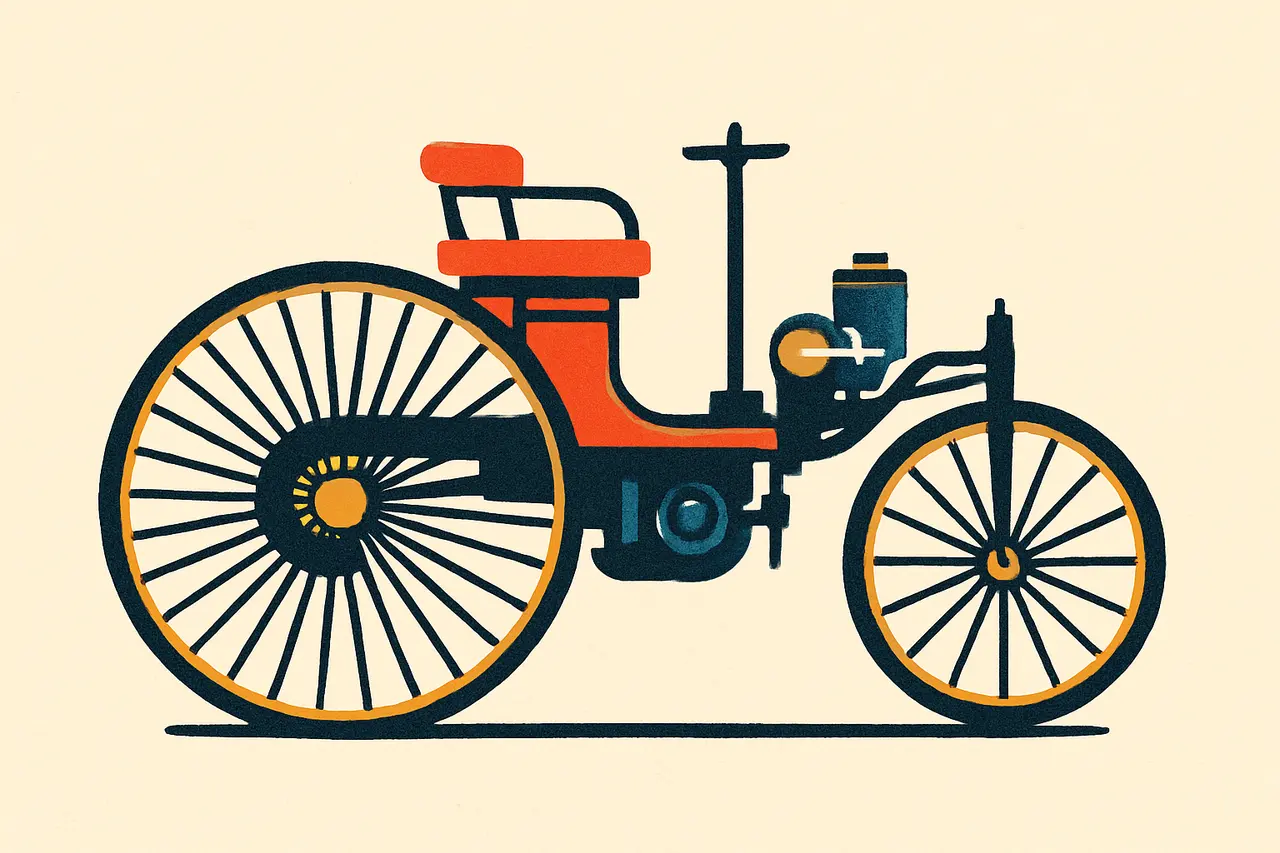
On a winter day in Mannheim, a German engineer filed the paperwork now treated as the birth certificate of the car.
On 29 January 1886, engineer Carl Benz filed a German imperial patent for a “vehicle with gas engine operation.” The application became patent DRP 37435, granted the following November, and is widely regarded as the founding document of the modern automobile.
What Benz had built was not a horse carriage with a motor bolted on, but a machine designed from the ground up to move under its own power. The three-wheeled Patent-Motorwagen carried a single-cylinder gasoline engine producing under one horsepower, with electric ignition and a tubular steel frame.
UNESCO later inscribed the patent in its Memory of the World register, calling it the conceptual seed of every car that followed.
It was a horseless carriage that, for once, actually needed no horse.
The public demonstration came in July 1886 on the streets of Mannheim. The vehicle was slow and fragile, and skeptics scoffed. Yet within a few decades the idea Benz patented on this date would remake cities, economies, and the shape of daily life across the world.
Sources & references
2 referencesWell-established. Corroborated by 2 independent sources.