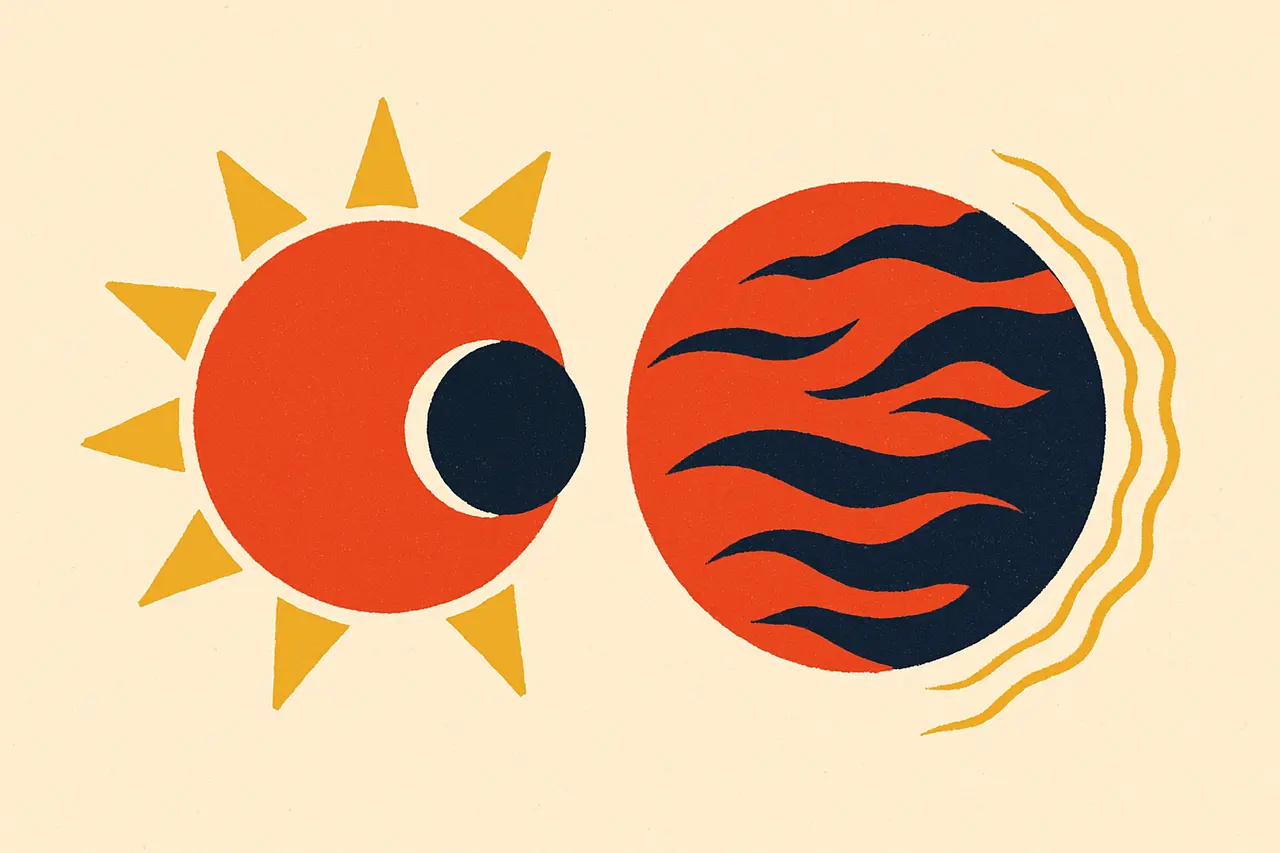
Does it rain diamonds on Neptune and Uranus? Probably
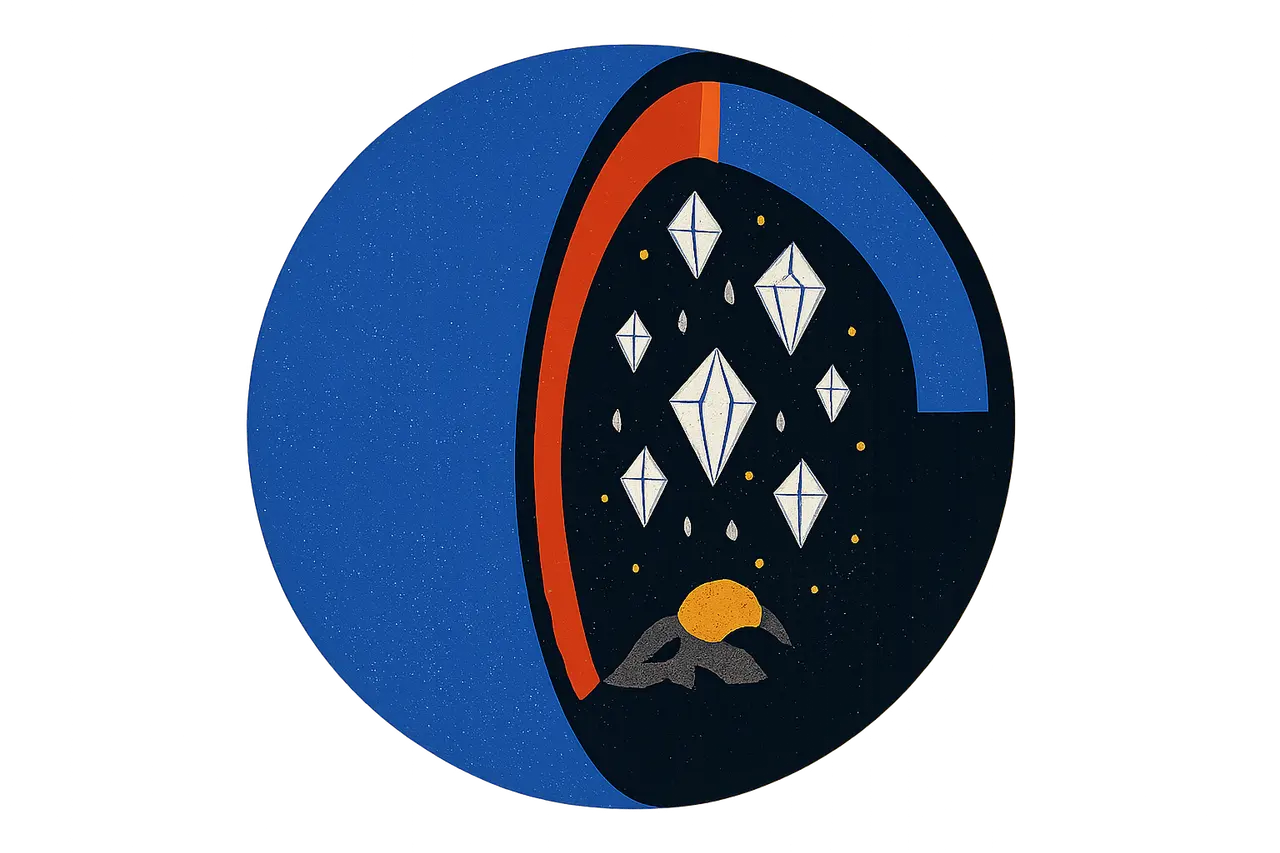
Lab lasers have turned plastic into diamond at ice-giant pressures, and a 2022 test suggests oxygen makes the planets' diamond rain even likelier.
It very likely rains diamonds deep inside Neptune and Uranus: lab experiments show that pressures expected more than 5,000 miles below their cloud tops can split carbon from hydrogen and squeeze the carbon into diamond, which would then sink toward each planet’s core.
How can we know if no probe can see it?
Through chemistry. No spacecraft has seen this, and none could; the layer lies far below anything a probe can reach. Methane, the gas behind Neptune’s blue tint, makes up about 1.5% of the planet, its most common ingredient after hydrogen and helium, and in the icy mantles it forms carbon-hydrogen chains that theorists long predicted would collapse into diamond under deeper heat and pressure.
In 2017 a team at the US Department of Energy’s SLAC National Accelerator Laboratory tested the idea by firing paired laser shocks into polystyrene plastic, reaching almost 1.5 million times Earth’s surface air pressure, conditions found roughly 10,000 km down. X-ray pulses lasting just 50 femtoseconds caught nearly every carbon atom snapping into diamond structures a few nanometres wide.
“Previously, researchers could only assume that the diamonds had formed.” (Dominik Kraus, lead author, 2017)
What changed in 2022?
Diamond rain may be more widespread than thought. A follow-up used PET, the plastic of drinks bottles, because its mix of carbon, hydrogen and oxygen is closer to the planets’ real makeup. The oxygen sped up the split between carbon and hydrogen, letting nanodiamonds form at lower pressures and temperatures than before. The same run hinted at superionic water, a conductive “hot, black ice” that could explain the two planets’ unusual magnetic fields.
On the planets themselves, researchers expect the gems to grow to perhaps millions of carats and, over thousands of years, settle into a thick layer around the core. That matters well beyond our solar system: ice giants are now thought to be the most common kind of planet around other stars.
Sources & references
4 referencesEmerging. Corroborated by 3 independent sources.