Smiling Buddha: why India's 1974 nuclear test wasn't peaceful
On this day · 18 May 1974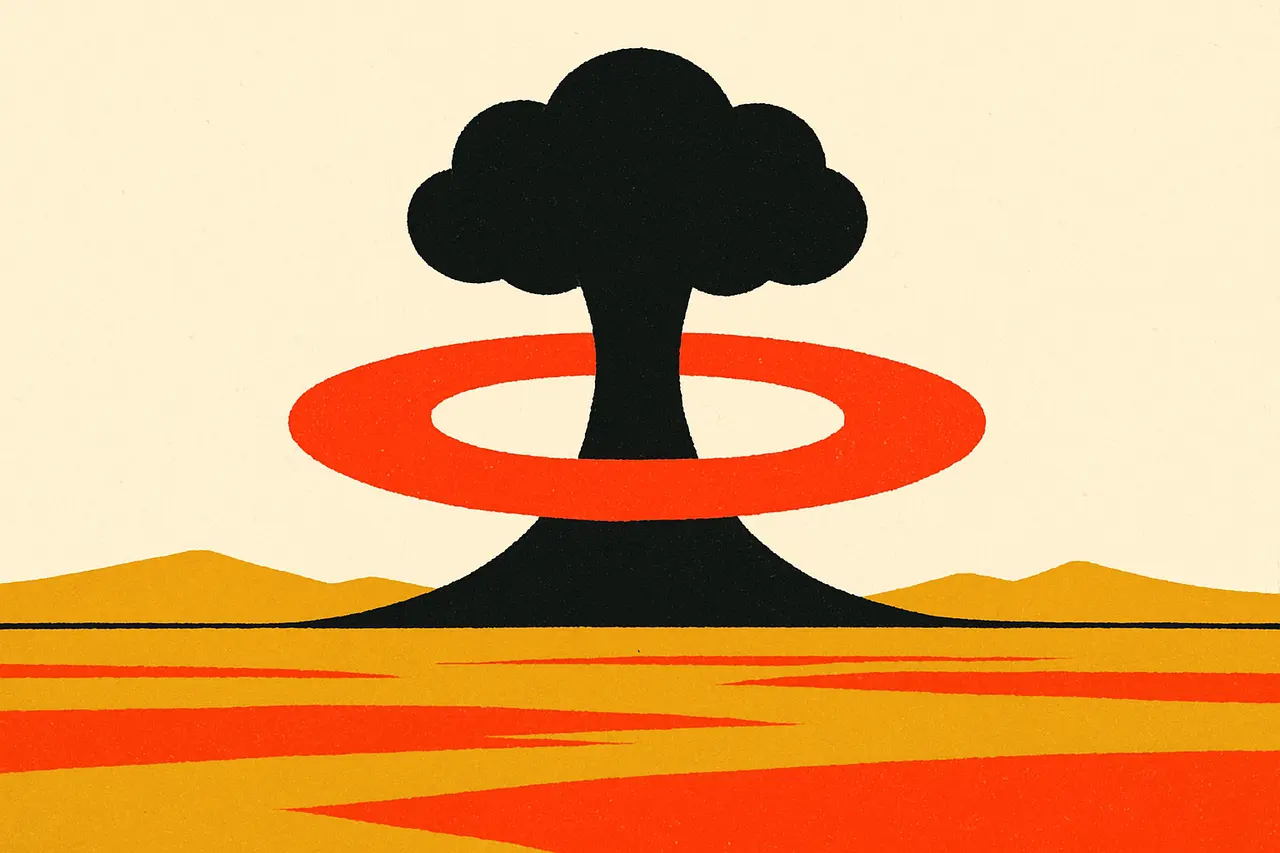
India called its 1974 Pokhran blast a 'peaceful nuclear explosion'. No such use ever followed, and its leader later admitted it was a weapons test.
India carried out its first nuclear test on May 18, 1974, detonating a plutonium device code-named Smiling Buddha in a shaft 107 metres below the Pokhran range in Rajasthan. It made India the sixth country to explode a nuclear device, and the first outside the five permanent members of the UN Security Council.
India claimed a yield of 12 kilotons; U.S. intelligence put it at 4 to 6, and the Federation of American Scientists notes the test may have been only partly successful. The scar is still visible from orbit: a subsided area about 60 metres in radius inside a distinctive heart-shaped rim.
New Delhi called the blast a “peaceful nuclear explosion”, meant for jobs such as mining and digging canals. In the half-century since, India has never once used a nuclear device for that kind of work, and in 1997 Raja Ramanna, who led the test team, admitted in an interview that it had been a weapons test. The label still did diplomatic work. Canada had helped India build its first reactor in the 1950s, with the United States supplying heavy water, on promises of peaceful use. India argued that a peaceful explosion broke no agreement, and the Nixon administration publicly accepted that, imposing no sanctions.
India “climbed into the nuclear clubhouse on the shoulders of Canadian technology and Canadian aid.” — journalist Robert Gillette
The real response came through rules. Alarmed at how civilian aid had been turned to a bomb, the main supplier nations formed the Nuclear Suppliers Group to police exports of sensitive technology, and Congress passed the Nuclear Non-Proliferation Act of 1978.
Twenty-four years after Smiling Buddha, on May 11 and 13, 1998, India returned to the same Pokhran range, set off five more tests and declared itself a nuclear-weapons state.
Sources & references
3 referencesWell-established. Corroborated by 3 independent sources.