Helium was found on the Sun 27 years before Earth
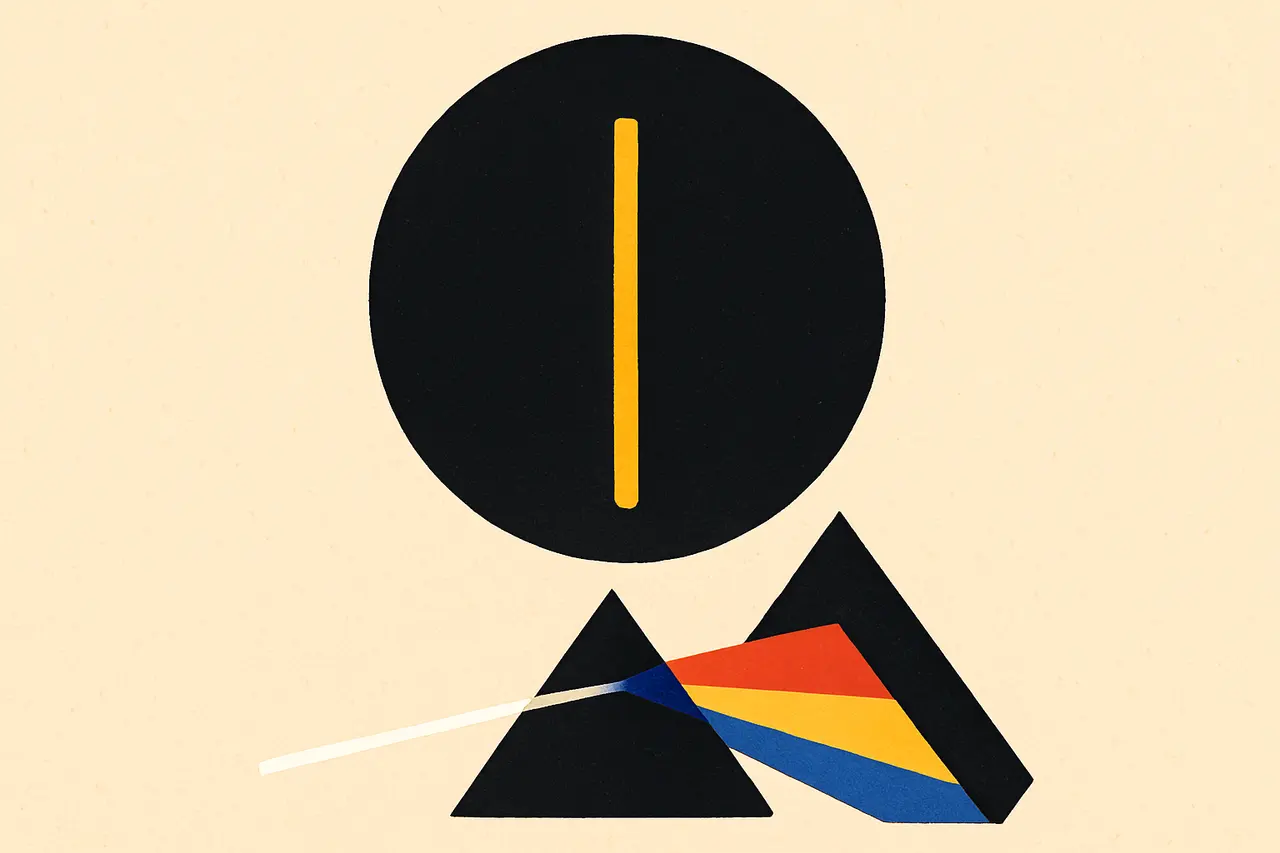
Helium was spotted as an unexplained yellow line in sunlight in 1868, named as a metal, doubted for years, and only bottled on Earth in 1895.
Helium was discovered on the Sun 27 years before it was found on Earth: on 18 August 1868, the French astronomer Pierre Janssen, watching a total solar eclipse from Guntur in India, saw a bright yellow spectral line that matched no known element. It was not isolated on Earth until 1895.
The two famous dates belong to two men. On 20 October 1868, the English astronomer Norman Lockyer saw the same line in London without an eclipse, using a new seven-prism spectroscope finished just four days earlier. Janssen’s letter from India and Lockyer’s report reached the French Academy of Sciences within minutes of each other, so both were credited and the two became friends. Lockyer later described how he left the observatory to fetch his wife, Winifred, to confirm what he had seen:
“…quitted the observatory to fetch my wife to endorse my observation.” — Norman Lockyer, Philosophical Transactions
The “-ium” ending is there because Lockyer assumed the new element was a metal; it turned out to be an inert gas. And helium was not the only element astronomers “found” in sunlight: coronium, proposed in 1869, turned out in 1939 to be ordinary iron. Helium is the one that survived.
How Earth caught up
- 1882: Luigi Palmieri saw the yellow line in gases from Vesuvius, unconfirmed.
- 1889: William Hillebrand saw the same line in gas released from the mineral uraninite.
- 1895: William Ramsay in London, and independently Per Teodor Cleve and Nils Abraham Langlet in Uppsala, extracted it from uranium ore; Lockyer called its glow a “glorious yellow effulgence”.
Helium is the universe’s second most abundant element, yet makes up only about 5 parts per million of Earth’s air. Today it is extracted from natural gas, which can contain up to 7% helium.
Sources & references
3 referencesWell-established. Corroborated by 3 independent sources.