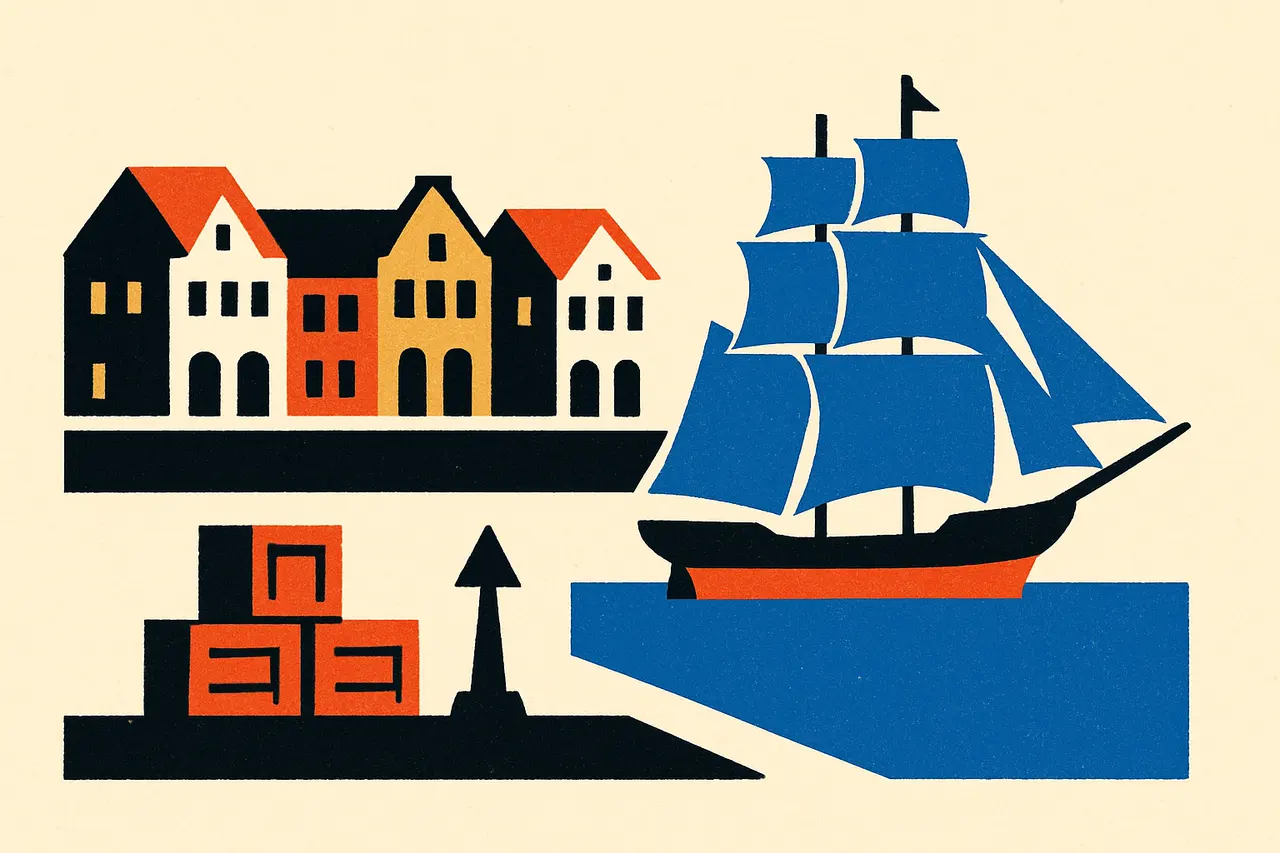
The Hanseatic League was a medieval trade network of nearly 200 towns
Centuries before the EU, German merchant towns ran a commercial superpower across the Baltic and North Seas.
From the 13th to the 15th century, a confederation of merchant towns dominated trade across northern Europe. The Hanseatic League began with German towns led by Lubeck and grew into an association that, at its height, linked nearly 200 cities and towns stretching from the Low Countries to Russia.
The League controlled commerce on the Baltic and North Seas, moving furs, wax, timber, grain, salt, iron, cloth and - crucially - fish, with the herring trade especially valuable. To protect its interests abroad, it ran fortified trading posts called kontors in London, Bruges, Bergen and Novgorod.
It was a commercial power without a state - a network of guilds and towns acting in concert.
The League had no standing army or central government, only shared interests and the leverage of collective bargaining and, when needed, blockades. It began to wane in the 15th century as nation-states rose.
Sources & references
2 referencesWell-established. Corroborated by 2 independent sources.