Fingerprints solved their first murder in 1892
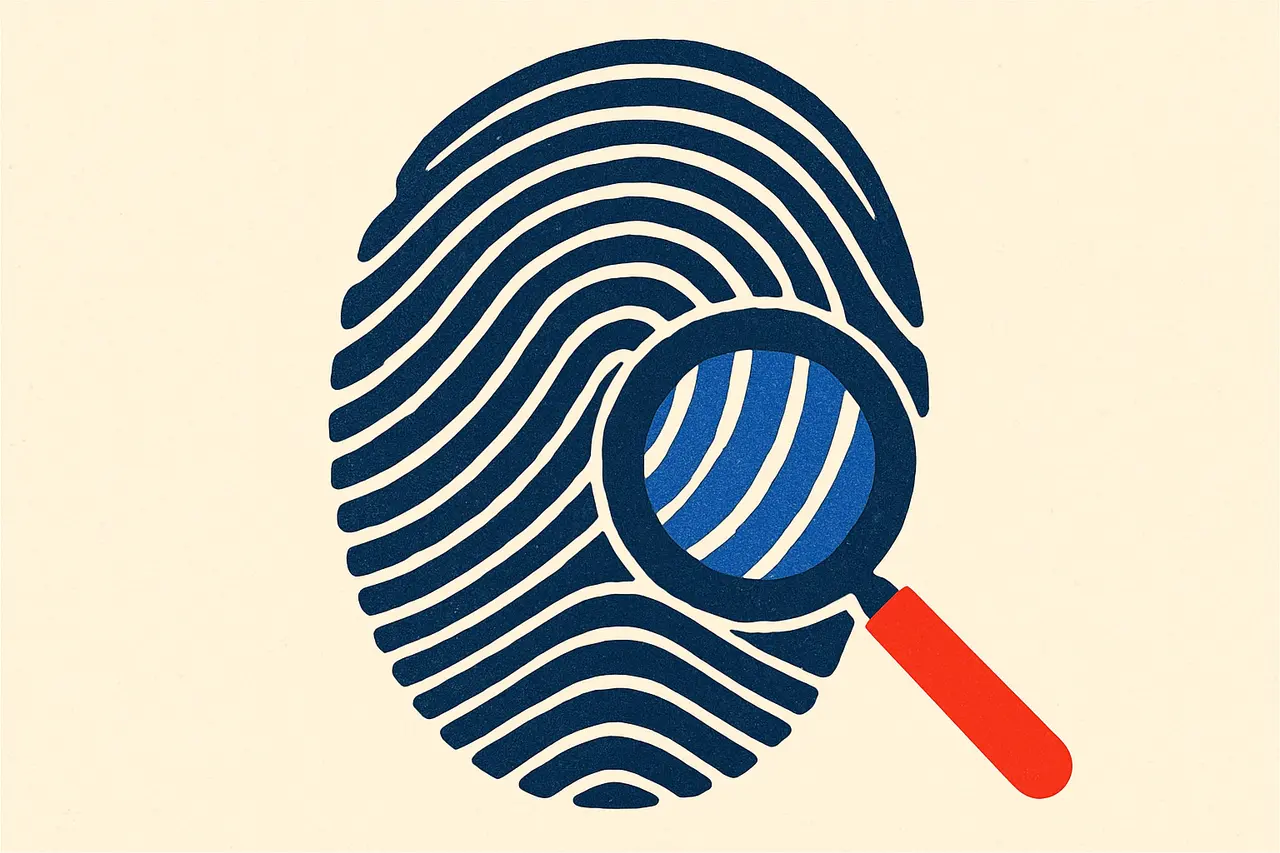
Every fingertip carries a pattern that never changes and is shared by no one else - and a bloody print on a doorframe was the first to convict.
Long before DNA, the ridges on a fingertip became forensic science’s first reliable signature. By 1880, Henry Faulds and William Herschel had argued that fingerprint patterns are unique to each person, and Sir Francis Galton verified it, showing that the arrangement of ridges “does not alter with growth or age” and that no two are alike. Galton sorted them into arches, loops, and whorls.
The leap from theory to courtroom came in Argentina. Police official Juan Vucetich built the first workable identification system, and in 1892 used it to crack a double child murder near Buenos Aires. A bloody fingerprint left on a doorpost identified the mother, Francisca Rojas, as the killer.
It was the first time a fingerprint had ever secured a criminal conviction.
Within two decades, the Galton-Henry system was adopted at Scotland Yard, and fingerprinting spread worldwide as the standard tool of identification.
Sources & references
2 referencesWell-established. Corroborated by 2 independent sources.