The first author in history signed her own name
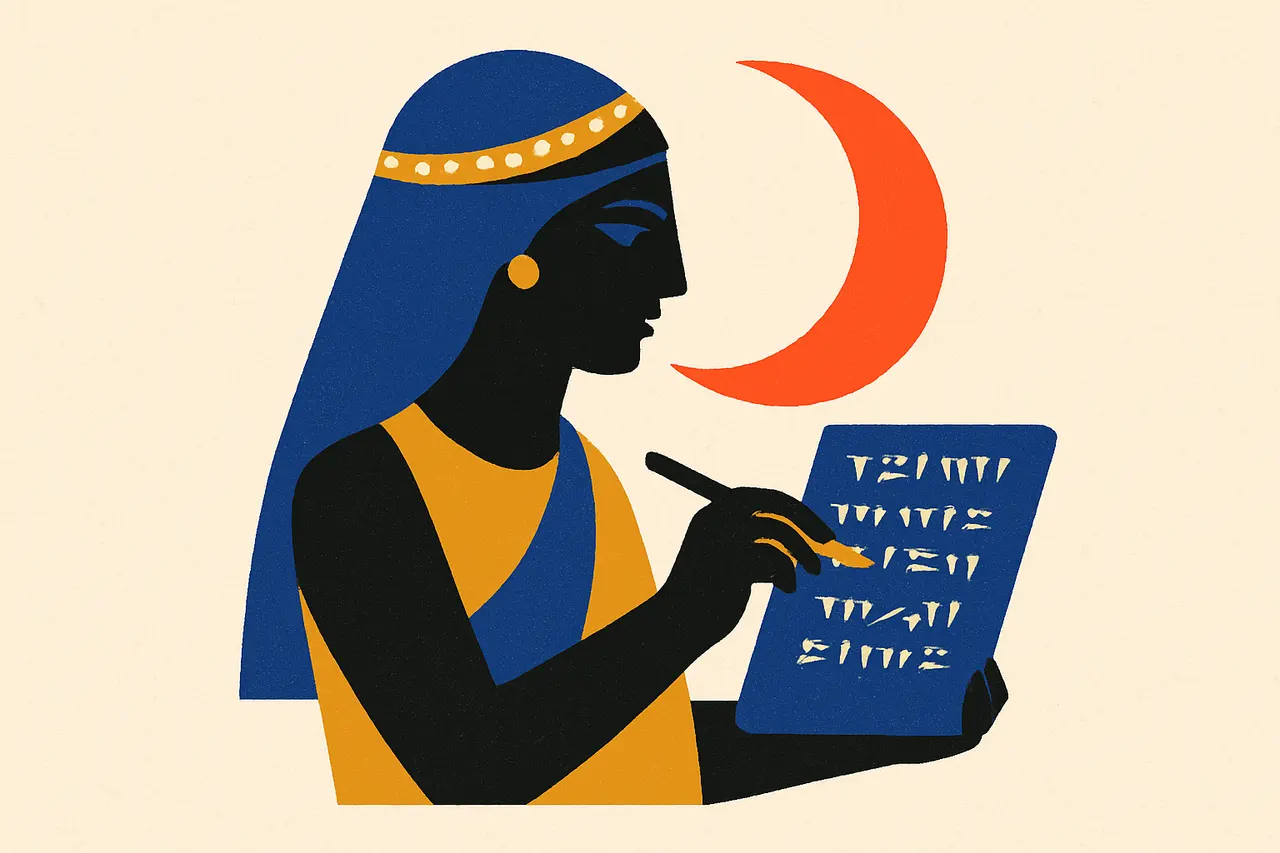
Some 4,300 years ago, a Mesopotamian high priestess wrote "I, Enheduanna" — and became the earliest author known by name.
For most of human history, literature was anonymous. The earliest writer we can actually name is Enheduanna, a high priestess who lived around 2300 BCE in southern Mesopotamia, in what is now Iraq.
She was the daughter of Sargon of Akkad (reigned c. 2334-2279 BCE), the empire-builder who installed her as high priestess of the moon god at the city of Ur. From that powerful post she composed hymns to the goddess Inanna and a cycle of temple hymns — and, remarkably, she named herself inside the poems, declaring her authorship in the text itself.
Her most celebrated work is “The Exaltation of Inanna” (Nin-me-sara), a long, personal poem in which Enheduanna writes of being driven from her temple by a usurper named Lugal-Ane and pleads with the goddess to restore her. The grievance is specific and the voice is unmistakably first-person — part of why scholars take her authorship seriously rather than treating the byline as later legend.
That act of self-naming, more than a millennium before Homer, is why she is remembered as the first author of record.
The catch is that the surviving copies are Old Babylonian school texts, copied out by students roughly 500 years after she lived — which keeps the authorship debate alive, since none of the originals survive. What rescued Enheduanna from obscurity was the Disk of Enheduanna, a carved alabaster disk that names and depicts her, excavated by archaeologist Leonard Woolley at Ur in the 1920s. That object tied the literary tradition to a real historical woman, making her a written byline older than the Bible, older than Greek epic, older than almost everything.
Sources & references
2 referencesWell-established. Corroborated by 2 independent sources.