Diamonds and pencil lead are both made of pure carbon
The hardest natural mineral and the soft core of a pencil are the same element. Proving it took a century of burning diamonds.
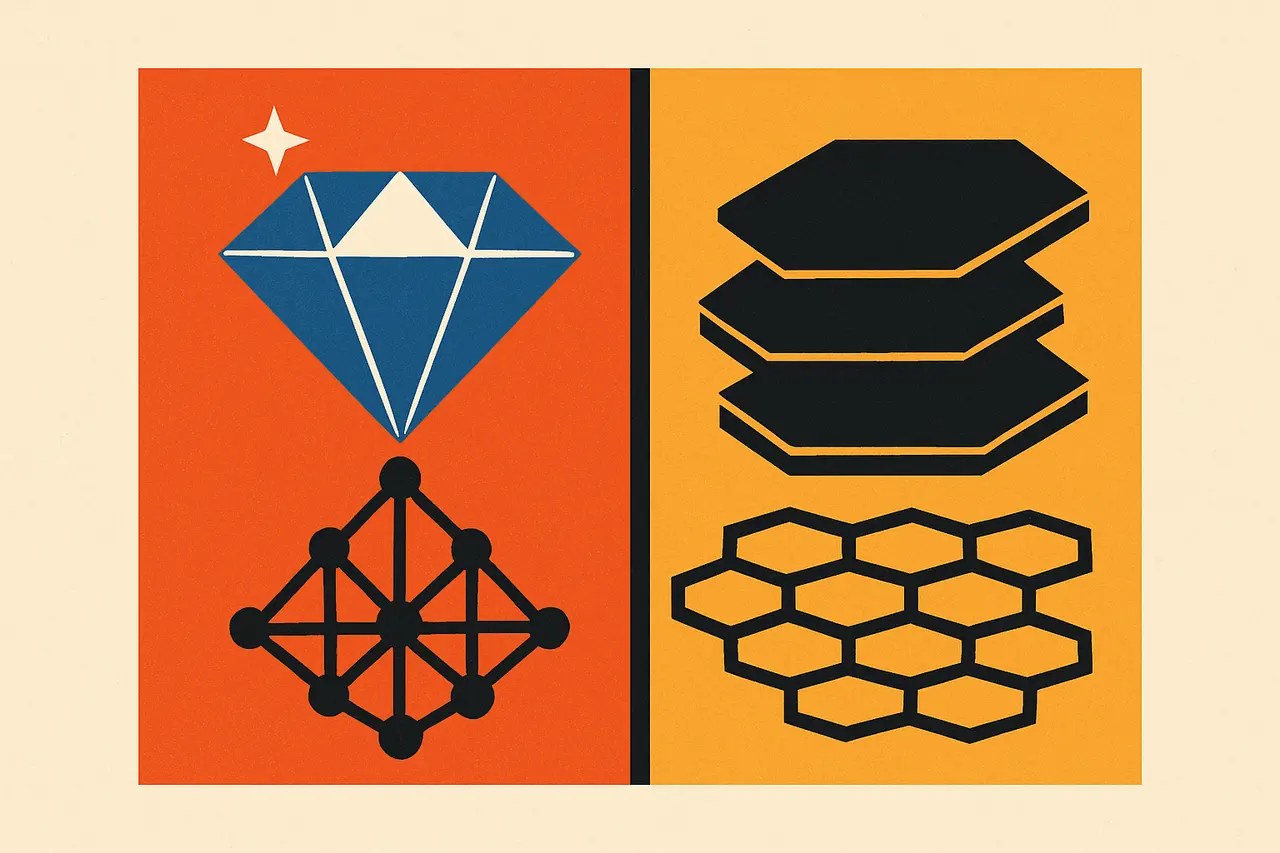
Diamond and the graphite in pencil “lead” are the same element: pure carbon. Diamond is the hardest natural substance, a perfect 10 on the Mohs scale, while graphite rates just 1 to 2 and smudges off on your fingers. Minerals with identical chemistry but different crystal structures are called polymorphs; chemists call the different forms of an element allotropes.
The difference is how the atoms bond. In diamond, every carbon atom grips four neighbours in a rigid tetrahedral network, with bonds equally strong in every direction. In graphite, each atom bonds to only three, forming flat hexagonal sheets that are held to one another by much weaker forces. The sheets slide and flake off, which is exactly what happens when you write. Because diamond locks up all four of each atom’s outer electrons, it is an electrical insulator, yet it conducts heat up to five times better than copper.
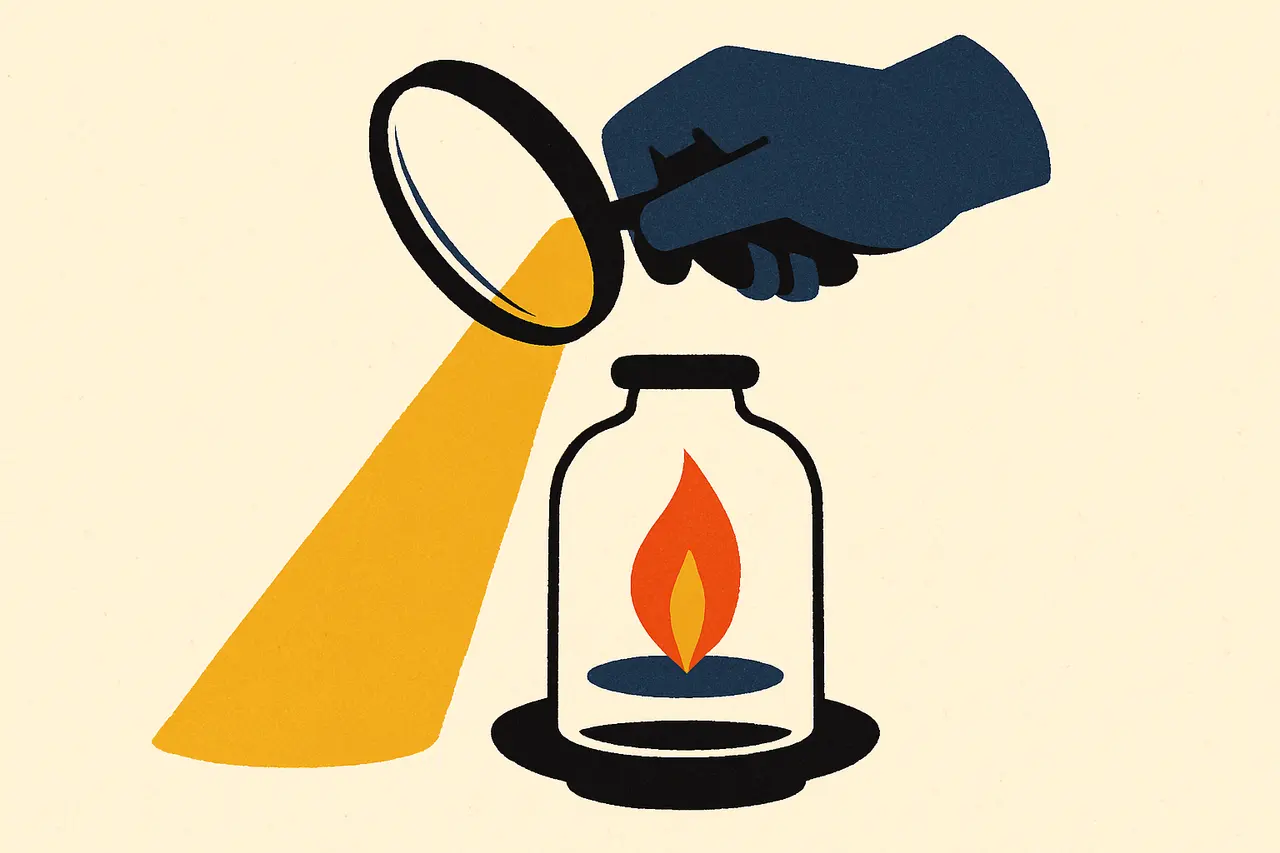
Proving that a diamond is carbon took more than a century of destroying gems. In 1694, in Florence, Giuseppe Averani and Cipriano Targioni focused sunlight on a diamond with a large magnifying glass until it disappeared. In 1771, Pierre-Joseph Macquer and Godefroy de Villetaneuse repeated the experiment in France. Then in 1796 English chemist Smithson Tennant showed that a burning diamond forms only carbon dioxide, proving it is simply a form of carbon.
There was never any lead in a pencil, either. The core is a mixture of graphite and clay, and more graphite gives a softer, darker mark. The misleading name goes back to the ancient Romans, who ruled guide lines with pieces of real metallic lead.
So the gulf between a crown jewel and a pencil is not chemistry at all, only geometry.
Sources & references
4 referencesWell-established. Corroborated by 4 independent sources.