A small sea snail's shell was money across three continents
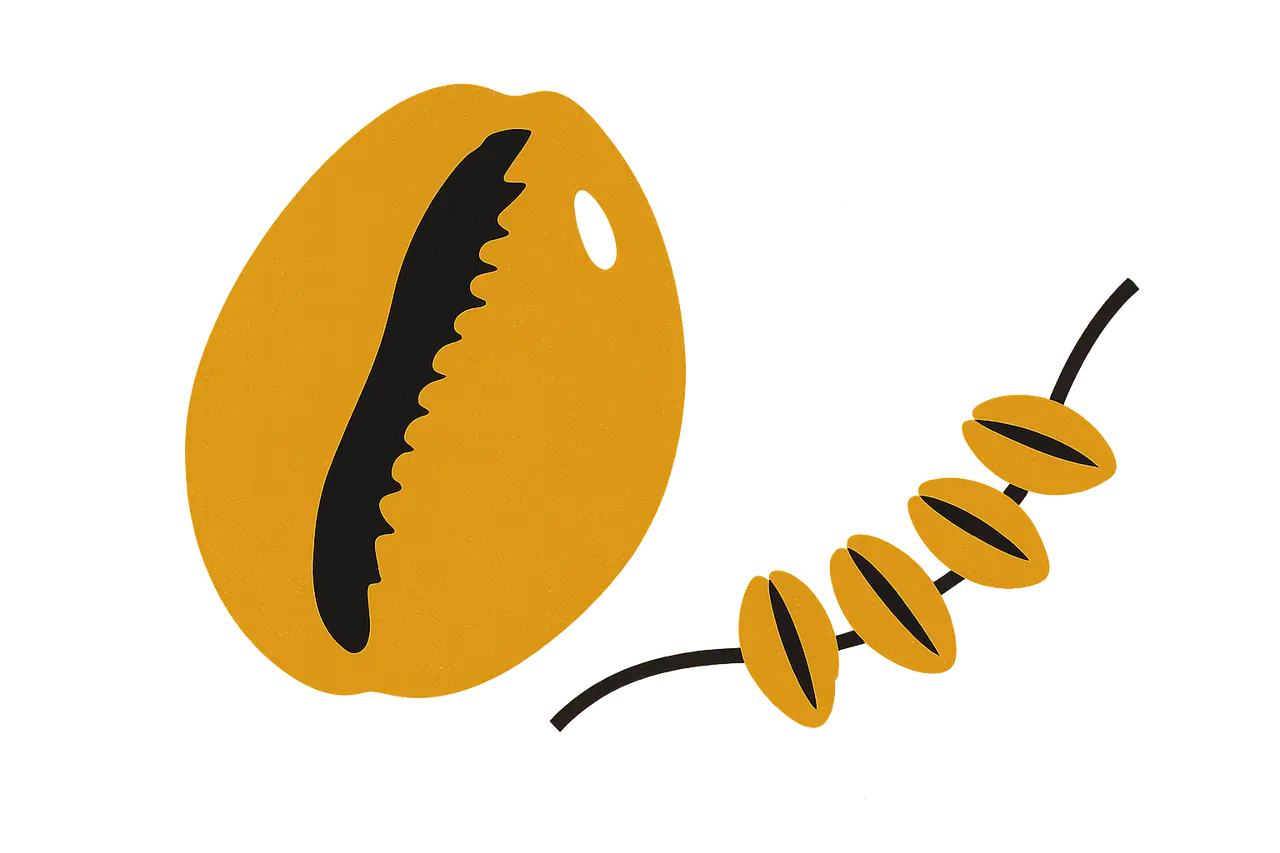
Durable, near-impossible to forge and uniform in size, the money cowrie circulated from China to West Africa.
Long before banknotes, one of the world’s most widespread currencies was a glossy seashell. The money cowrie (Monetaria moneta), a small sea snail native to the Indian Ocean and harvested above all in the Maldives, served as money across Africa and Asia for centuries.
It made surprisingly good currency. Cowries were durable, near-impossible to counterfeit, couldn’t be melted down, and came in naturally uniform sizes - they could be counted or weighed, and even strung together. They circulated in China, around the Bay of Bengal, and across West Africa.
Their history also has a dark chapter. From the 16th to the 19th centuries, billions of Maldivian cowries were shipped via Europe to the Bight of Benin, where they became a unit of exchange in the transatlantic slave trade. Echoes linger today: Ghana’s one-cedi coin still bears a cowrie.
Sources & references
2 referencesWell-established. Corroborated by 2 independent sources.