Cologne Cathedral Was Completed After Six Centuries
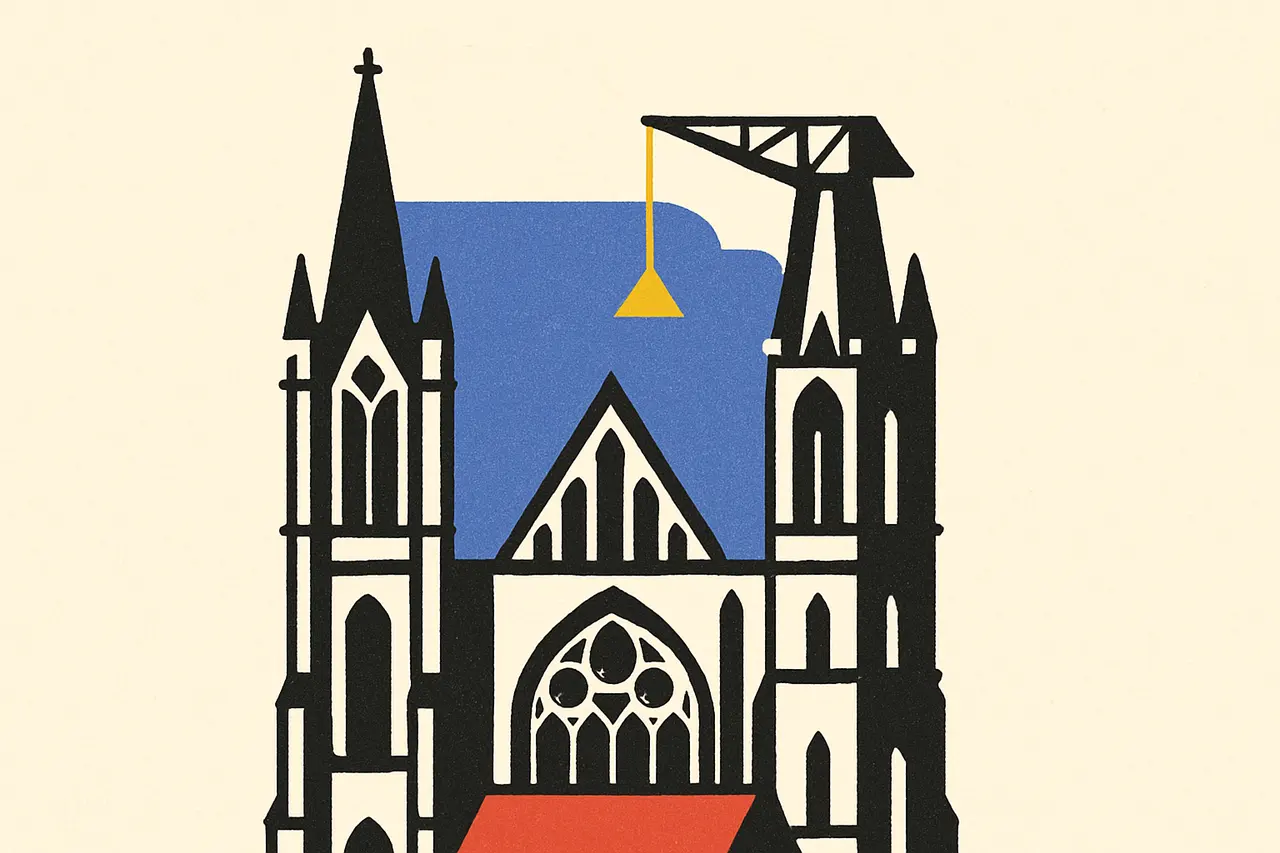
A Gothic blueprint drawn up in the 13th century finally rose to its full height more than 600 years later.
Few buildings carry a deadline as casually as the Kölner Dom. Archbishop Konrad von Hochstaden laid the foundation stone on 15 August 1248, but work stalled for centuries, and by the 1500s the half-built choir stood capped by a famous wooden crane that became part of the city’s skyline.
A wave of 19th-century enthusiasm revived the project. Builders followed the surviving medieval plans almost exactly, and in 1880 the two west towers were finally crowned. With its spires reaching just over 157 metres, the cathedral was briefly the tallest building in the world, ending roughly 632 years of on-and-off construction.
A medieval design, paused for centuries, was completed without abandoning the original plan.
Today the cathedral is a UNESCO World Heritage Site and Germany’s most visited landmark, a masterpiece of Gothic architecture that drew millions through its doors long before its stonework was ever truly “finished.”
Sources & references
2 referencesWell-established. Corroborated by 2 independent sources.