The Burj Khalifa Is Shaped to Confuse the Wind
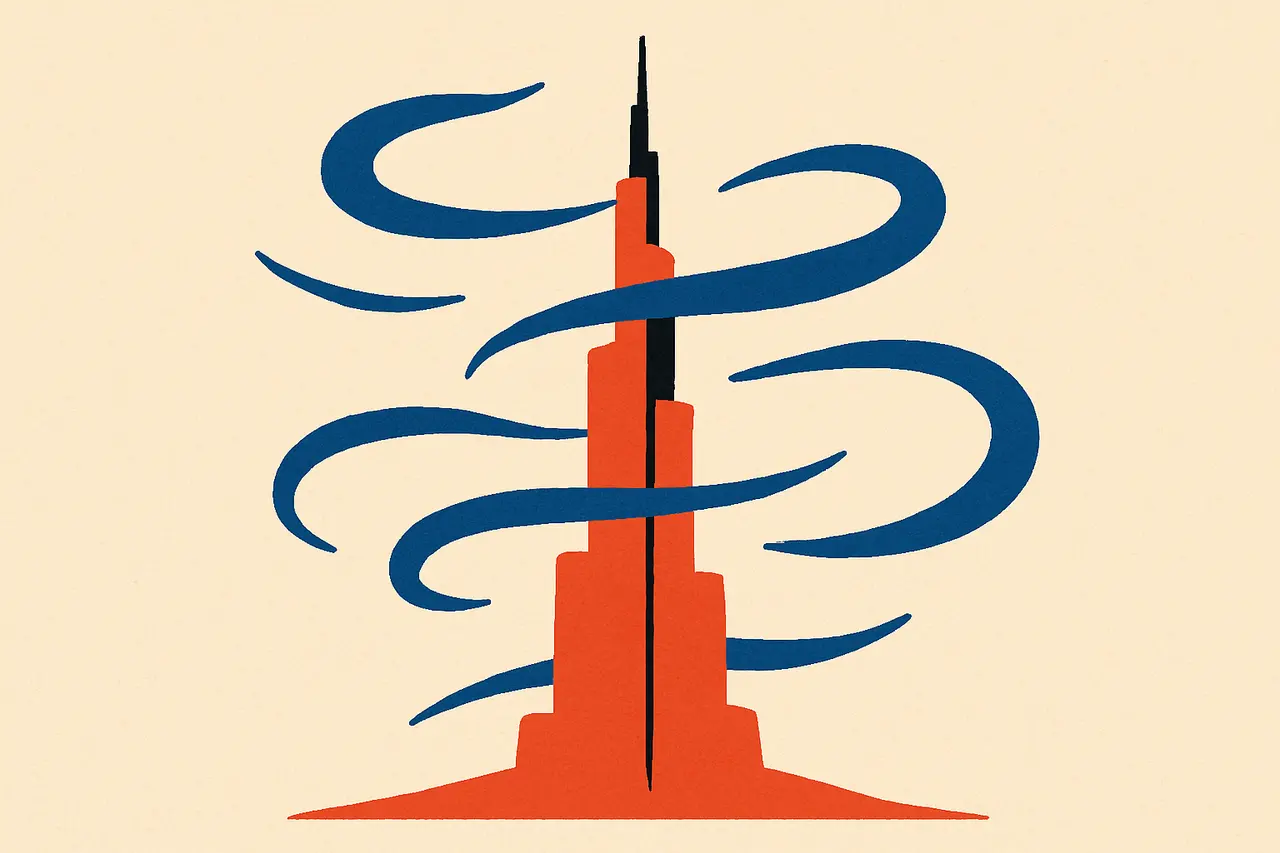
At 828 metres, the world's tallest building owes its height to a Y-shaped plan that scatters the wind before it can shake the tower.
Dubai’s Burj Khalifa rises 828 metres (2,717 feet) across 163 floors, and since it opened on 4 January 2010 it has held the Guinness World Records title for tallest building on the planet.
The enemy of any supertall tower is not gravity but wind. Engineers solved it with geometry. The Burj sits on a three-lobed footprint inspired by a desert flower, with a hexagonal central core buttressed by three wings that step back in a spiral as the building climbs.
Because each setback changes the tower’s shape, gusts never form a steady, resonant rhythm against it — an effect chief structural engineer William Baker of Skidmore, Owings & Merrill calls confusing the wind.
Without that trick, a building this slender would sway uncomfortably and shed dangerous vortices. Instead the wind is broken into smaller, disorganised swirls, letting the tower stay both tall and steady.
Sources & references
3 referencesWell-established. Corroborated by 3 independent sources.