Britain's first H-bomb test in 1957 fell short of a megaton
On this day · 15 May 1957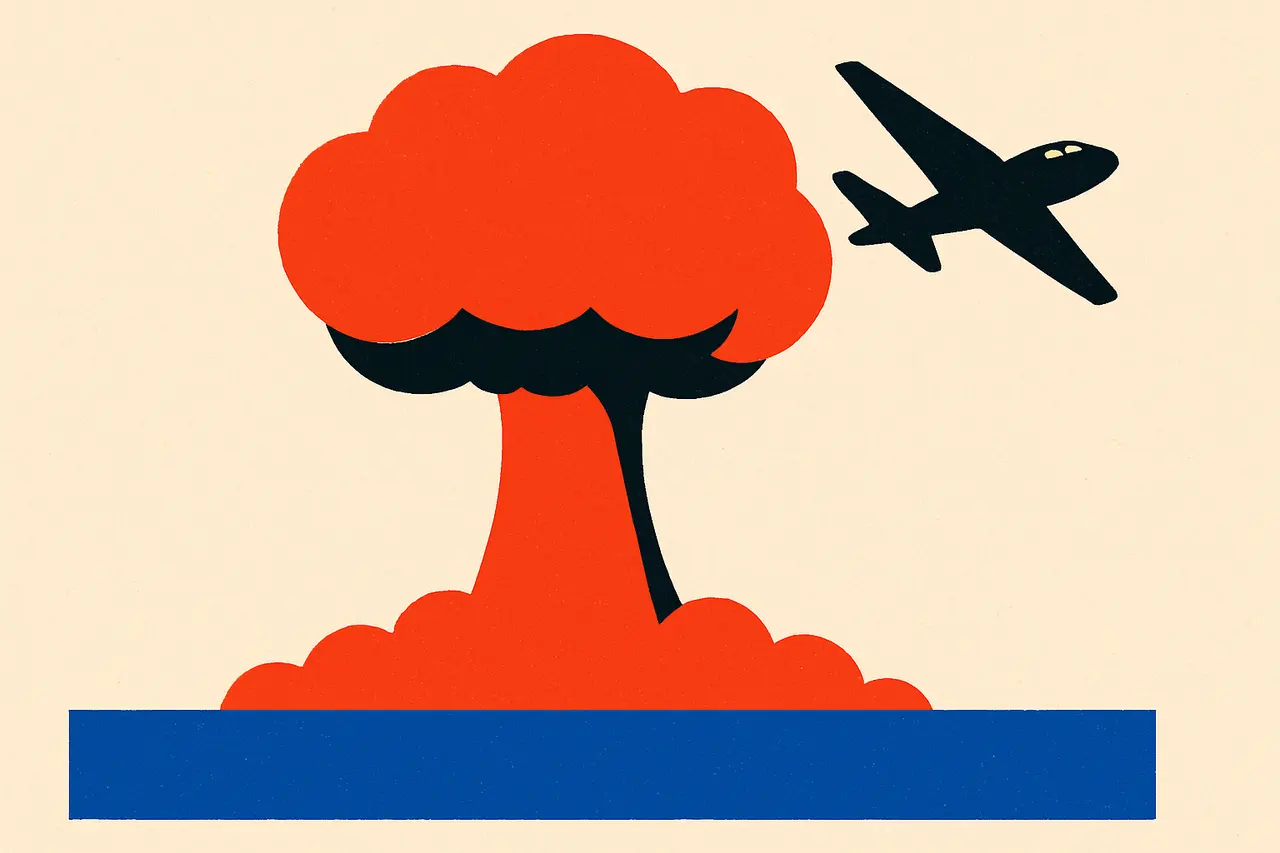
Short Granite, dropped over the Pacific on 15 May 1957, was announced as a megaton-range blast. It was nearer 0.3 megatons — the real success came six months later.
Britain’s first hydrogen-bomb test took place on 15 May 1957, when a Royal Air Force Valiant bomber dropped a device code-named Short Granite high over Malden Island in the central Pacific, but its yield fell well short of the megaton class: Britain’s first fully successful H-bomb came on 8 November 1957.
Short Granite opened Operation Grapple, staged from a base on Christmas Island. Technically the shot was a step forward: most of its energy came from the radiation-implosion stage that makes an H-bomb work. The trouble was the number, and how it was handled, as the rest of the series played out:
- 17 May 1957: with first reports suggesting about 0.5 megatons, the Minister of Supply, Aubrey Jones, tells the press the results were “in the megaton range”.
- 20 May 1957: London knows the true figure was nearer 0.3 megatons. Ministers choose not to retract the claim.
- 8 November 1957: Grapple X becomes Britain’s first fully successful hydrogen bomb.
- 1958: Grapple Y in April, then four Grapple Z shots between 22 August and 23 September, close the series; the United States amends its Atomic Energy Act and signs the Mutual Defense Agreement, reopening nuclear cooperation with Britain.
- 1993: the real yield of Short Granite, secret until now, comes out.
The demonstrations achieved their political aim. With the Soviet Union also holding the H-bomb, Washington had little reason to keep its secrets from London, and after a brief moratorium Britain’s later tests were carried out jointly with the US in Nevada, with British weapons modelled on American designs.
The people who staged Grapple waited far longer for recognition. In November 2022, 70 years after Britain’s first nuclear test, the government announced a Nuclear Test Medal for service personnel and civilians under UK command at the test sites, including Christmas and Malden Islands, between 1952 and 1967. Around 22,000 veterans were expected to be eligible, among them personnel from Australia, New Zealand, Fiji and Kiribati.
Sources & references
5 referencesWell-established. Corroborated by 5 independent sources.