Blaise Pascal, born 1623, built the second known calculator
On this day · 19 June 1623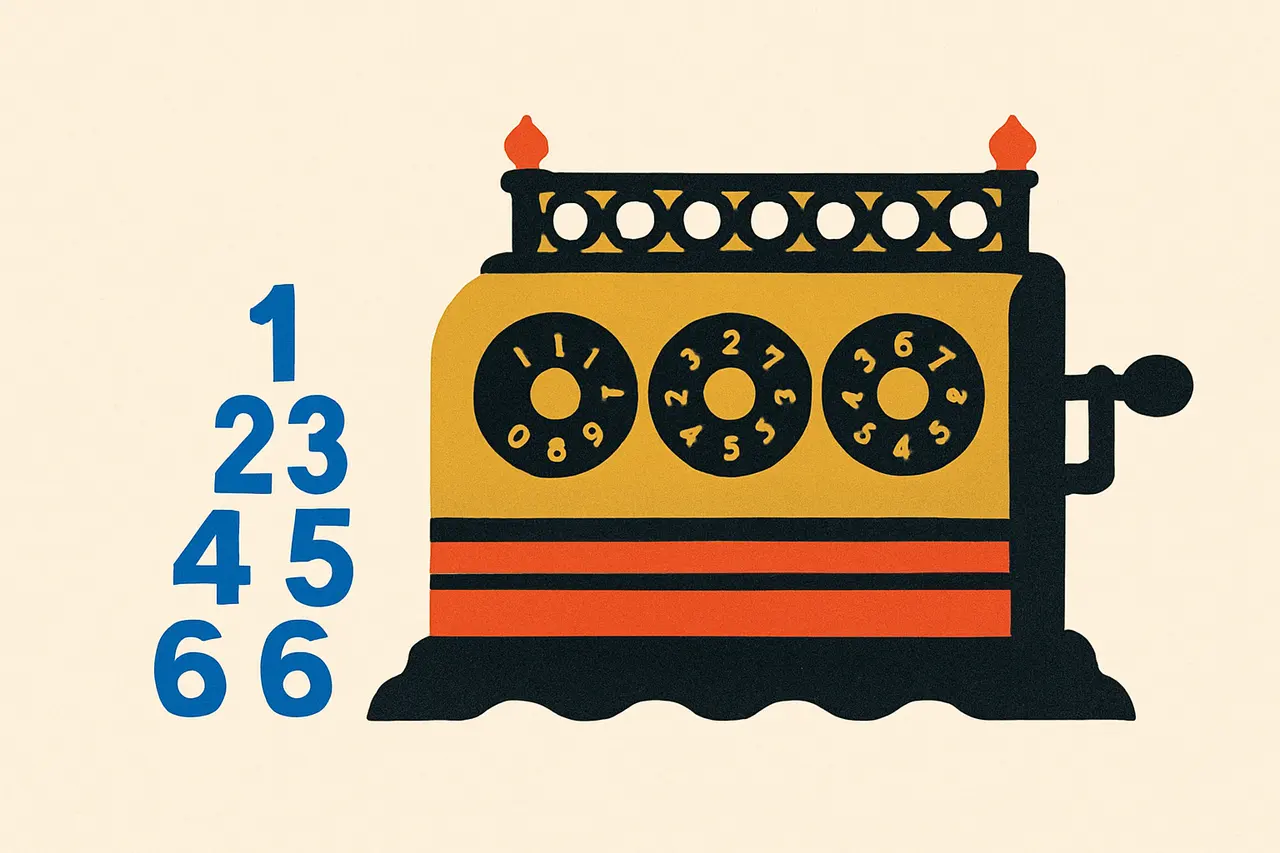
Born on 19 June 1623, Pascal built the Pascaline in his teens. An earlier, long-lost machine beat it, and French coinage made it fiendish.
Blaise Pascal was born on 19 June 1623 in Clermont (now Clermont-Ferrand), France, and in the 1640s built the Pascaline, a geared adding machine that was almost certainly the world’s second mechanical calculator, not the first. He died in Paris on 19 August 1662, aged 39.
Pascal began the machine in 1642 to help his father, a tax collector in Rouen, and worked on it for about three years. By 1652 around 50 had been made, but only about 15 sold. The Computer History Museum notes that the carry mechanism relied on falling weights rather than linked gears and was fragile and unreliable. Money made the job harder: French currency had 20 sols to the livre and 12 deniers to the sol, so a livre held 240 deniers rather than a tidy 100, and his wheels had to carry correctly between these uneven units.
The young inventor was also combative. After visiting him in 1647 and arguing about whether a vacuum could exist, René Descartes wrote unkindly to Christiaan Huygens that Pascal
…has too much vacuum in his head.
Who built the first mechanical calculator?
Wilhelm Schickard, a professor at Tübingen, built a calculating machine around 1623 to 1624 and ordered a second for the astronomer Johannes Kepler, but it burned in a workshop fire while only half finished. His design survived only as sketches in his papers and Kepler’s, which were not rediscovered until 1935. For three centuries Pascal therefore got the credit by default.
What else is Pascal known for?
Probability, above all. His lasting mathematics came in 1654, in five letters with Pierre de Fermat about how to split the stakes of an unfinished game, which laid the foundations of probability theory. He also wrote a key treatise on the arithmetical triangle that now bears his name, though he was not the first to study it. In later life he turned to religion and philosophy, leaving the notes published as the Pensées.
Sources & references
4 referencesWell-established. Corroborated by 3 independent sources.