A single Google search runs across thousands of servers in a fraction of a second
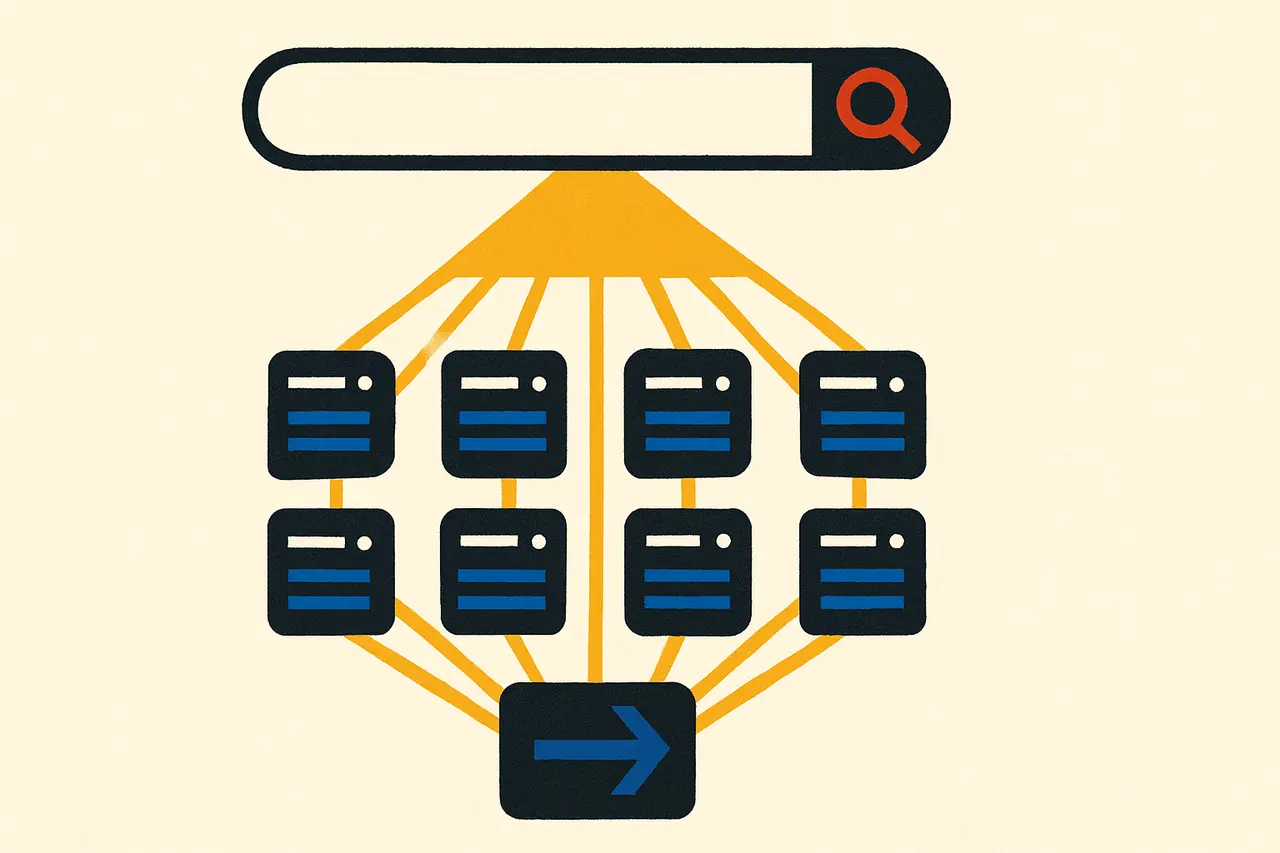
The query you typed isn't answered by one computer — it's shattered into pieces and raced across a fleet of machines at once.
Hit enter on a search, and you trigger a feat of choreography most people never notice. In a fraction of a second, Google’s systems sort through hundreds of billions of webpages to rank the most useful results. No single computer could do that in any reasonable time. So Google doesn’t use one. It uses thousands at once.
The trick is parallelism. Google’s index, a colossal map of the web, is too big to live on one machine, so it’s split into many small pieces called shards, spread across a huge fleet of servers. When your query arrives, it’s dispatched to many machines simultaneously. Each searches only its own slice of the index, and because they all work at the same time, the slow part finishes in milliseconds.
“Partitioning the overall index also lets a single query use multiple processors.”
The results then flow back to a coordinating server, which merges and ranks them into the single ordered list you see. Google’s own engineers described running this on clusters of more than 15,000 commodity PCs, ordinary, inexpensive computers rather than exotic supercomputers, with backups so a few failures never break a search.
The payoff is counterintuitive: a problem that would take one machine a very long time is solved almost instantly, simply by slicing it thin and handing the pieces to a crowd. Every search is really thousands of tiny searches, stitched together before you’ve finished blinking.
Sources & references
2 referencesWell-established. Corroborated by 2 independent sources.