A reactor in the Idaho desert lit four light bulbs with atomic power
On this day · 20 December 1951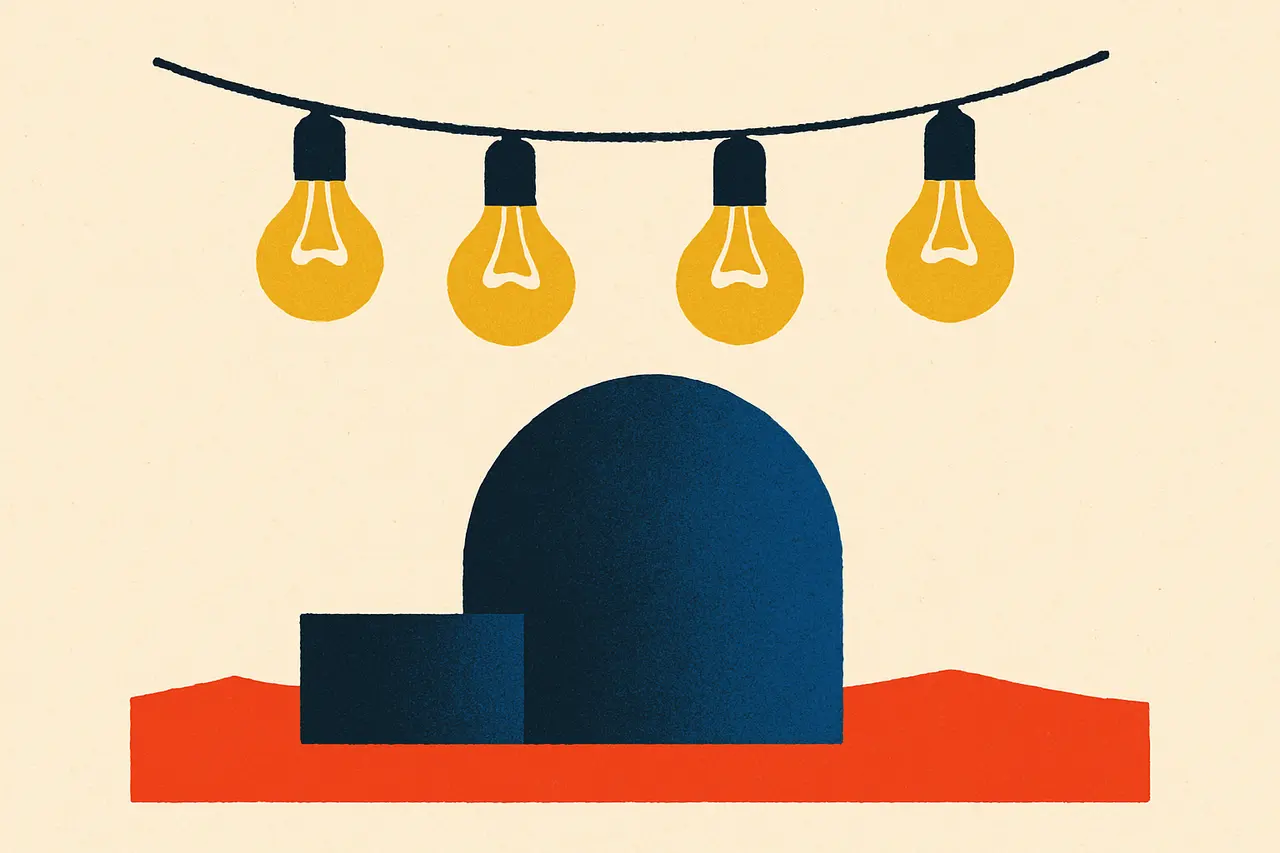
On December 20, 1951, EBR-I in the Idaho desert turned nuclear fission into usable electricity for the first time, lighting four ordinary bulbs.
On December 20, 1951, in the high desert near Arco, Idaho, a squat reactor called the Experimental Breeder Reactor I (EBR-I) did something no machine had done before: it turned the heat of splitting atoms into electricity people could actually use.
At 1:50 p.m., the reactor produced enough current to illuminate four 200-watt light bulbs. The next day it powered its own building. The point was less the wattage than the proof of concept; the engineers, led by Walter Zinn, even chalked their names on the wall beside the bulbs.
EBR-I became the first power plant to produce usable electricity through atomic fission.
EBR-I was also a breeder reactor, designed to create more fissile fuel than it consumed. It ran experiments until 1964 and is now a U.S. National Historic Landmark. The four glowing bulbs marked the quiet beginning of an industry that today supplies roughly a tenth of the world’s electricity.
Sources & references
2 referencesWell-established. Corroborated by 2 independent sources.